Friday, April 25, 2014

The Uncreated Energies By Peter Chopelas

I am reposting an essay that used to be located here, but unfortunately the domain ran out:

The Orthodox Christian understanding of heaven and “punishment” (called ‘hell’ in the west) is inextricably linked to the Biblical concept of the Uncreated Light of God. In fact, it is impossible to understand the process of salvation outside of the energy/divine light context. The Uncreated Energies or Light are understood by the Orthodox to be the Divine Uncreated Energies of God.  This Energy is the "consuming fire", also called the Shkhinah Glory in Hebrew, the spiritual fire that is "like a refiners fire…refiner and purifier of silver” [Mal 3:2-3].  It is the fire that burns the weeds left in the field, the fire that burns the pruned branches, it is the Lake of Divine Fire of the Book of Revelation, and the thirst and burning that torments the Rich Man in Hades. Yet, the same fire that torments the impure gives warmth, healing, life and comfort to the pure of heart.
The tern “uncreated” was first used by St. Gregory Palamas in the 16th century in order to distinguish these energies from created energies.  This concept was not new with St. Gregory, it was only a clarification that he made of what was already understood by the Orthodox.  St. Gregory was engaged in debates with some Italian theologians who were advocating the Roman Catholic heresy of created “purgatorial fires” with which God “purges” imperfectly atoned Christians in the after life before they can enter heaven.  Unfortunately they could not properly understand the Greek of the New Testament and the west had invented this concept to explain their misunderstanding.
The Greek word “energeia”, and it’s various forms, appears over 30 times in the New Testament, yet it is not translated as “energy” even once in most popular English translations!  It is variously rendered as: operation, strong, do, in-working, effectual, be mighty in, shew forth self, and even simply dropped out of the sentence; everything except what it means.  Yet, this word was well established in the Greek language in the first century.  It was first known to have been used by Aristotle, some three centuries before Christ, as a noun "energy" in the metaphysical sense, and has been borrowed in recent years in English and used as an engineering term.  Notice that a noun is a “thing”, yet it is typically rendered in English as a verb or an adjective, which violates basic grammar rules.
When we are fully and perfectly energized by the Divine Energies, we radiate the pure Light of God.  Translating directly from the Greek, Saint Paul writes “For it is God who is energizing in you, according to His will and to energize for the sake of His being well-pleased.”  (Philippians 2:13). The NKJV translates it as, "For it is God who works in you both to will and to do for His good pleasure". Note how much clearer the translation is when the word “energon” is translated as "energize" rather than as "works".
St. Paul further writes “[Christ] who will change the appearance of our humble bodies to take on the form of the body of His Glory, through the energization of His Power, and to put into submission all things to Him” [Philippians 3:21]. And to the Ephesians in verse 1:19-20 Paul writes “and what exceeding greatness of His power, in us who believe, through the energization of His mighty strength, energized in Christ, raising Him from the dead and seating Him in the right hand of Him in the heavens”.  This energy “in us” is the same Energy that will change the bodies of the saved to be glorified resurrected bodies. It is the same Divine Energy that raised Christ from the dead.  This Energy is in fact, the Grace of God. As St. Paul writes “… I became a minister according to the gift of the Grace of God given to me by the energization of His Power”. (Ephesians 3:7).  The NKJV- incorrectly uses the words “effective working” for energization in this verse.
This Energy has the power to heal, as St. James writes “Confess your sins to one another, and pray for one another, so that you may be healed. Prayers energized by a righteous one are very powerful”. [James 5:16]. The word “energized” is the correct meaning, rather then the typically “fervent” or “earnest” (both adjectives) used in most English translations. The Greek word means “given energy to” hence, ‘energize’.
Receiving this Divine Energy is the results of faith in the true God, as St. Paul says"…[you received]…according to the truth, God’s Word, which also energizes in you who believe" (1 Thess.2:13). You do not receive this Energy by works, but by faith, “[isn’t it] in vain, if the One who provides you the Spirit and the powerful Energies in you, were by works of the law, or by hearing in faith?” (Galatians 3:4,5).  In fact, freedom from the law comes through the energizing of love “For in Christ Jesus neither circumcision nor uncircumcision has any strength, but rather faith energizing through love” [Gal 5:6].  This energy is the Grace of God, in Eph 3:7 St. Paul writes “That I was made an attendant through the gift of the Grace of God, granted to me by the energization of his power”.
This same energy also restrains evil  “for already the mysterious lawless one is only restrained now by His Energies, until he come out of the midst of it” [2 Thess 2:7].  So again we see that these Energies are both Grace to us, but also a restrainer of evil. Notice that in comparing all of the above verses with typical English translations, it would be difficult to discern this Biblical concept of Divine Energy.  Demonstrating that the very heart of the means of salvation is simply missing from most English translations.
There are many stories, both ancient and relatively modern, that tells of saints radiating light when they pray.  For example St. Mary of Egypt, St. Sava, St. Mathew of Ethiopia, and many others, all are reported to have radiated this divine light.  The Light that Christ radiated on Mt. Tabor during the Transfiguration is this Uncreated Light, seen in Christ revealing his Divine Nature to his disciples. The Orthodox Hymn for this Feast Day says "inasmuch as they could bear it".  The halos in icons are not rings or crowns (as often wrongly represented in western religious art) but rather a sphere of light, like the sphere of light around a candle in a dark room.  This light that Christ, his mother the Theotokos, the angels and the saints are depicted as radiating in the halos shown in icons is this Uncreated Light of God. This is the Transforming Light that “makes all things new” (Rev. 21:5). The Energy is Uncreated because it existed before creation, it is the Light and Truth and Grace and Love and Life that IS God.  When we have that Truth, Grace, Love and Life of God, than we become transformed, and too will radiate this Divine Light.  
Salvation in Orthodox Christianity, as taught in the Holy Scriptures, begins with being forgiven, and then ultimately "getting to" heaven, but the process is much more than that.  It means being healed, purified, illumined and transformed by God by His Divine Energy into a similitude of God [Jas 4:9], which will bring us into union with Him. It is the process in which humans are completed or “perfected” [see Heb 10:14 among others], “divinizing” us, making us “Christ-like” or more accurately “assimilated to God”, through the Energization of His Power.  When we are in perfect harmony with God [in the Gr. “synergy”--1Cor 3:9 ‘for we are God’s synergisers’], the Holy Spirit energizes within us, transforming us, and then we too radiate this Uncreated Light.  Just as the saints radiate this Light of Christ; “All our faces were unveiled, and we beheld in a mirror the same image [Gr. “ikon”], transformed by the glory into glory, the glory of the Lord” [2 Cor 3:18].  “And having put on the new, getting renewed into full knowledge, into an image [or ‘icon’] of the One that created him” [Col 3:10].  Which is why we make icons of the saints radiating this “glory of the Lord”. 
Interestingly, in properly rendered icons none of the Apostles have halos until after Pentecost, when the Holy Spirit was poured out into the Church. Pentecost is when the Apostles were “assimilated” into divination (that is “made similar” to divinity), transforming them [literally in the Greek “metamorphoses”] into holy beings, into “non-earthy ones” (lit. meaning of the Greek word for “holy”), and when the Holy Church had begun.  Human similitude with God was lost by Adam and Eve [see the Septuagint Gen 1:26 “in the image and similitude of God”], and only became available again to us at Pentecost.
The ancients understood that light was the purest form of energy.  This is why there are so many Biblical allusions to the sun as an example of what God is.  The sun was the source of “pure” light, life and heat, and this created light was likened to the Uncreated Light of God, the source of Everlasting “Zoe” and “Zesty”, spiritual “life” and “heat” or more properly “vitality”—as in energy.  This is why the term “illuminated” is used to describe the saints who saw these “divinizing” Visions in Heaven.  In fact, it is impossible to properly understand the role of Light in the Bible if one does not understand it from the Light-Energy Transfiguration perspective.
Yet, Saint Paul also cautions the Romans about this Energy; “…for when we were in the flesh, passionate for sins according to the law, the Energy in our members brings forth the fruit of death“ (Romans 7:5).  And likewise he warns the Corinthians “For this reason it energizes death in us, though it is Life in you” (II Cor 4:12). In Hebrews 4:12 there is another sober warning “For the living Logos of God, and [the living] Energies, also sharper than a two edge sword, passing through, dividing both the soul and spirit, joints from marrow, judging the thought and intents of the heart”.  In this verse, in English Bibles the word “energies” is just dropped from the text. The implication in the Greek is that the “logos” is one edge, and the “energy” is the other edge of the sword, implying that without this Energy, one is not fully armed.
When we come face to face with this powerful Uncreated Light in an impure, sinful and unregenerated condition, we cower in fear and pain, for our impurities are revealed and "burned" by this Illuminating Energy.  Yet those who love God and want nothing but to be in constant communion with God, will strive towards purity and will bask in glory in this same Light.  The same Energy that causes eternal death in the sinful, purifies and strengthens the faithful. A prayer of St. Simeon the Translator states:  “...Thou who art a fire consuming the unworthy, consume me not, O my Creator, but rather pass through all my body parts, into all my joints, my reins, my heart.  Burn Thou the thorns of all my transgressions. Cleanse my soul and hallow Thou my thoughts ...that from me… every evil deed and every passion may flee as from fire”. (The Liturgikon, Antakya Press, Prayers of Thanksgiving after Holy Communion, p.328).
In the day of Judgment, as we stand naked before God, the penetrating Divine Light of God’s Presence will open the “books”. His Light will reveal what is in these books – the books of our hearts. And it will be shown that the heart is either drawn to God or repulsed by Him, to be either in heaven or in hell. St. Symeon the New Theologian (10th century) says that it is not so much what we do but what we are that will determine our future state. He says, “In the future life the Christian is not examined if he renounced the whole world for Christ’s love, or if he has distributed his riches to the poor or if he fasted or kept vigil or prayed, or if he wept and lamented for his sins, or if he has done any other good in this life, but he is examined attentively if he has any similitude with Christ, as a son does with his father”.
St. Ignatious of Antioch, (late first and early second century) describe God as the furnace that a craftsman uses to temper a sword.  When a properly prepared sword is placed within the fire, it makes it stronger and the sword takes on the properties of the fire, it gives off heat and light.  However, this same fire will melt and destroy a sword that was not properly prepared. This is a metaphor of how those that desire God and His Life are energized and transformed by that Life and Light and how those that don't, experience destruction.
This Biblical concept of the Uncreated Energies of God is at the root of difference between the Eastern Orthodox and Western Christianity, whether Protestant or Roman Catholic. In the west, the mystery of the Divine Energies was abandoned because it can only be understood within the metaphysical mystiric perspective, which was rejected in the west in favor of the juridical rationalist perspective. Tragically, in the west a few centuries after the Great Schism (1054 AD) this innovation (i.e. heresy) developed as a result of an attempt to rationalize God’s purifying fires.  Latin theologians surmised that God created a place called purgatory with created purging fires (as opposed to uncreated) to "purify" those that die with imperfect atonement. They further rationalized that paying indulgences could buy our loved ones out of these painful purging fires faster.  This rationalization also helped keep the church prosperous and coffers full.
The western ideas had its roots in Augustinian theology (who was heavily influenced by the Greek pagan philosophers).  Unfortunately Augustine could not read Greek and had to devise his own theology from imperfect Latin translations.  Late in his life he recanted much of his earlier writings, an act which was ignored in the West. Thomas Aquinas, Luther and Calvin all developed their own theologies from Augustine's erroneous writings, and ignored Augustine’s later retraction.  This is how the pagan notion of a God that both punishes and rewards made its way into western Christian theologies.  Another major influence was the 13th century fantasy novelist Dante, who’s political satire known as the "Inferno" borrowed heavily from pagan mythology and bears little resemblance to Biblical eschatology. Some Orthodox would contend that the western view of God as He who both claims to love us, but also would condemn us to eternal punishment, is a schizophrenic view of God.  It is reminiscent of the abusive groom who claims to love his bride but can not stop punishing her.
   Clearly this is not the nature of a loving God, a God that pours his energizing love out on everyone unconditionally. There is no "place" of torment, or even a "place" apart from God, because there is in a sense no "place" at all in the after life; being outside of time and space.  The “place” is actually a condition of either punishment – “hell” or of great joy -- paradise, depending on how one experiences the presence of God and His Uncreated Energies. This Energy is also what "separates” the saved from those that are lost. It is also what restrains evil and sin when “caught” in the Energy of God.
For a person who hates God, and has done nothing but pursued his own self-centered desires all his life, it would be far more terrifying and painful to spend eternity in the fiery embrace of God’s almighty and Divine Love with no escape, than it would be to be far from Him in a place where He is not present (which is not possible).  For there is nothing that can separate us from the Love of God even if we wanted it!  “For I am persuaded that neither death nor life, nor angels nor principalities, nor powers, nor things present nor things to come, nor height nor depth, nor any other created thing, shall be able to separate us from the love of God, which is in Christ Jesus our Lord” [Romans 8:39]
This is why Christianity is the religion of Love. Experiencing God’s loving Presence and His in-filling transforming Energies in glory or in torment, as Paradise or as punishment, is the Heaven and “hell” of the Bible.


Sunday, April 06, 2014

Wolfgang Giegerich, Joss Whedon, and the Soul

There is a soul dimension to everything we do. It’s not eternal. It is an attitude, found in between the practical “what’s in it for me?” selfishness and the dogmatic altruism of the religious or political martyr. Those who can appreciate it know a boundless source of hope, even in times of sadness and suffering. [paraphrase of Wolfgang Giegerich, What is Soul?]

Joss Whedon's television series Angel (the spin-off of Buffy the Vampire Slayer) talks explicitly about the soul more than any other TV drama. Although in Angel, the soul is hypostatized as a separate essence of a person that continues on after death as with the traditional Christian narrative, there are other elements of the show that imply that the issues of the soul is about this life, and not the Orthodox Christian vision of the after-life:
  1. Angel cannot die naturally, so why plan for something that might not ever happen?
  2. Multiple episodes depict human souls stuck somewhere as ghosts, brought back from the dead, or trapped within various artifacts, implying a more complex narrative than the black-and-white, either-Heaven-or-Hell version preached in traditional Christianity.
  3. Heaven or Hell are presented as places that you have chosen for yourself, not as places you are assigned to by the dictates of some “jealous God” as in the Judeo-Christian-Islamic tradition. Cordelia's time as a higher being is a parody of the Orthodox Christian idea of Heaven. The first line she speaks during her brief stint in the "higher realms" is, "God, I am so bored."  In season 5 of Angel when Lindsay is being held in Hell by Wolfram and Hart. Angel, Spike and Gunn are surprised to find that this layer of Hell is actually a suburban neighborhood where everyone lives the same cookie-cutter day over and over again, condemned by their own choice to conform instead of developing and applying their personal values.
So what does it mean in the context of Angel if we view his soul as being more about attitude than about anything else?

I think Angel has a lot to teach us about achieving a healthy balance between everyday human priorities and soul-level priorities. "Psychology" is derived from the Greek "psyche" for soul and "logos" for science, so in other words, the whole series of Angel can be read as an exploration of social psychology within capitalist society.

In coming posts I will use this lens to explore some of the series’ recurring themes.

Thursday, February 13, 2014

On our addiction to transcendence pt. 2

The first commandment of American economic life is “thou shalt appear constantly busy.” Even when there is nothing to do, the appearance of business must be maintained. To disrupt the appearance of business is to call into question the premise on which our entire economic structure is based: our insatiable addiction to transcendence. To say “no” to transcendence, even for a moment to desire balance instead, is outright rebellion.

This is why meditation always must be talked about and made public in some way. Private meditation is dangerous to the whole idea. Meditation must be brought into the public so that it, too, belongs to industry, becomes a choice for consumption, becomes yet another stage where our addiction to transcendence can repeat its performance.

But rather than seeing addiction as an experience that needs to be controlled, addiction can also be viewed as a frustrated passion frantically seeking a new mode of expression. And that gives me hope.

pt. 1 here

Monday, January 20, 2014

On the Social Need for Feminism

Just about everyone is inclined to check out someone they’re attracted to.
But in the case of straight men, we are taught to take it a bit further.
From the time that I was young, I was taught in subtle and not-so-subtle ways that everything belongs to me, in large part because I’m a man (though there’s definitely some racial and class socialization thrown the mix).
The disembodied 'I' identifies himself with a noncorporeal reality (the soul, consciousness, transcendence), and from this point on his body becomes Other.
My gaze is more than a simple look and appreciation. ...
It communicates that all bodies are available to me, that as a man, I control all space, and thus, any body that enters that space is mine to leer at and comment upon
From this belief that the body is Other, it is not a far leap to the conclusion that others are their bodies, while the masculine 'I' is a noncorporeal phenomenon. The body rendered as Other-the body repressed or denied and, then, projected-reemerges for this 'I' as the view of Others as essentially body.
Behind my stare exists an advertising industry that objectifies women’s bodies for incredible profit.
Behind my stare is a political system that seeks to regulate women’s bodies outside of their control.
Behind my stare is a pornography and media machine that communicates in nearly every single message that women are endlessly inadequate, weak objects and that men are dominant, in control, and powerful.
Hence, women become the Other; they come to embody corporeality itself. This redundancy becomes their essence, and existence as a woman becomes what Hegel termed "a motionless tautology." 
Jamie Utt - http://everydayfeminism.com/2013/04/the-difference-between-appreciation-and-objectification/
Judith Butler - http://www.egs.edu/faculty/judith-butler/articles/sex-and-gender-in-simone-de-beauvoirs/

Does the above passage accurately describe masculinity in our society? I have found that it does. I've noticed in myself a tendency to behave in the disassociated way the above passage describes. When eating, I race through random abstract thoughts rather than enjoying the food and taking pleasure in the nourishment to my body. When showering, I get lost in reflections of yesterday's conversation, rather than focusing on the task of cleaning myself. When driving, I allow myself to be lost in music, rather than being aware of the physical space that I zoom by.  In short, I disassociate from my body except as a medium for providing the hypnotic pleasure that fuels my mental flights.

But is biology destiny? Or can we at times overcome biological nature and shape culture in new ways? Western culture indoctrinates us to accept that is perfectly natural and inevitable that males will be addicted to the transcendent, leading to a whole culture of male entitlement. We need more outspoken male feminists to balance things out.

The inescapable presence of advertising in our society conditions us to constantly seek superficial rewards. We see advertisements displaying close-ups of salty, sugary, fatty foods, magazines overemphasizing the physical side of sex, and go to schools that promise economic prosperity in exchange for a few years of compliance.

Men in Western societies are especially conditioned to feel they are owed sex as a reward.

There is nothing inherently bad about rewards. Rewards are what makes the economy go.

The problem is entitlement--the feeling that one deserves a reward.

As psychotherapist Wolfgang Giegerich writes,
“The idea behind the feeling of deserving a consolation, reward, or praise is that they think by having done [an ordinary menial job] they have humbled themselves far beneath their actual princely position and need a compensation for their act. In this way they will hold on to and celebrate the majesty of the prince. By feeling that they have humbled themselves, they show precisely that they have not really humbled themselves, but are still living high up in the sphere of the principal and therefore think that they did something that actually was far beneath their dignity only as a favor and out of great kindness. They have not come down.” [Neurosis: The Logic of a Metaphysical Illness. p. 413]
Feelings of entitlement arise when the reward is the only motivation for a behavior.

Life should be more than a constant race for superficial rewards. It should also be about something deeper and grander.

Historically, we could say that our society is in rebellion against the Puritan idea that physical pleasure was sin. However, the idea that the body is a reward center designed solely to provide rewards to consciousness is equally wrong-headed.

The cure is in the feminist idea of ending the culture of male entitlements.

Rewards, when they are given, should be on both the physical and emotional levels. We need to educate people that sex is not a disassociated “physical need” that the current most prevalent sexual education medium teaches it is.

Saturday, January 04, 2014

On the Evidence Against Curved Space

I first stumbled onto Miles Mathis’s website in May of 2012, when I googled the words [“variable acceleration” newton leibniz]. I was impressed with his intuitive choice of words and his willingness to go deep into the history of science’s historical development, but was taken aback by some of his claims. Most of mainstream physics in the 20th century has fundamental mistakes, including Einstein? I had always thought science was based on objectivity, and therefore somewhat immune to mistakes of the scale Mathis was claiming. However, the writing style and historical arguments resonated so strongly with me, that I have kept reading.

It is becoming more and more clear to me that my initial intuitions were right about Miles Mathis's work. There's actually been an organization for the last 20 years that has been saying many of the same points. I still highly recommend Mathis’s work for historical and social perspectives and intuitive insight. Here I will present some other writings I have found, which I believe provide enough evidence for anyone to begin to question the mainstream acceptance of Einstein’s Special Relativity, which postulates that space itself is curved.


I do not claim that anyone has disproved the idea of curved space. I just claim that the idea of curved space is but one possibility among several. Other theories agree with the same degree of accuracy to the experimental evidence. Light moves too fast for any of the experiments performed to date to determine which theory is best.

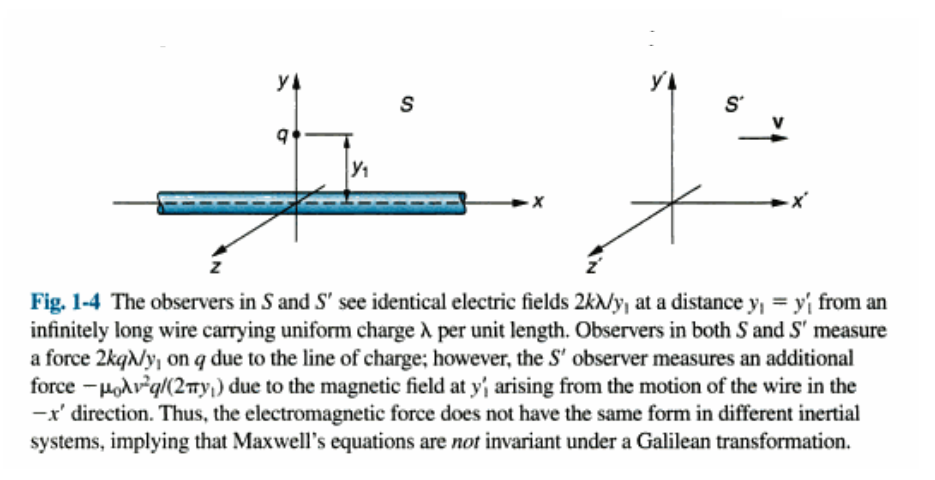
Special Relativity grew directly out of the assumption that observers in separate frames of reference will interact with the same rays of light. Another possibility is Curt Renshaw's Radiation Continuum Model, which theorizes that light is emitted in a continuum of velocities. In this theory, observers in separate reference frames interact with separate rays of light, so that the only light they see would be light that is travelling at speed "c" of 186,000 miles/sec as James Clerk Maxwell's set of equations predicts.

The best evidence that theories like Renshaw's, which are currently shut out almost completely from American universities, deserve more attention, is probably the words of Nikola Tesla written in 1932, 27 years after Einstein first published the theory: 

I hold that space cannot be curved, for the simple reason that it can have no properties. . . Of properties we can only speak when dealing with matter filling the space. To say that in the presence of large bodies space becomes curved is equivalent to stating that something can act upon nothing. I, for one, refuse to subscribe to such a view. - http://www.tfcbooks.com/tesla/1932-09-11.htm
Tesla and Einstein had no grudges. Einstein actually sent Tesla a birthday card in 1931. Tesla simply felt that Special Relativity was wrong, and held this view until his death in 1943. Granted Tesla was somewhat of a showman who enjoyed giving entertaining quotes to newspaper journalists, but he would have personally gained much more media attention by connecting himself to the media storm generated by Arthur Eddington’s alleged 1919 confirmation of Einstein’s theory. Unlike other claims Tesla made to the media of his outlandish experimental achievements, his theoretical disagreement with Special Relativity is unquestionably genuine.

Tesla almost unquestionably understands electromagnetism as well as anyone in history. Does anyone else find it odd that the man who understood electricity better than Edison and was the first to invent the radio, rejects the mainstream theory of how electromagnetic waves travel through space? There seem to be two possibilities. 1. Tesla is wrong, and just got lucky with his (multiple, groundbreaking) inventions. 2. Tesla is right, and the mainstream theory is wrong.


What about all the experimental verifications of Einstein's theory though?

Experimentally "proving" the accepted theories of mainstream academia is the name of the game in theoretical scientific research, today, so many alleged experimental verifications of special and general relativity have been written. In researching this topic, I was surprised to learn that the speed of light was actually first discovered and measured in the 1600's, by observations of the delayed intervals in the eclipses of Jupiter's moon, Io. We have known about the problem of light's finite speed for nearly 350 years, but it is only in the last 150 that anyone has paid it any attention! It turns out the speed of light is so fast, that we can ignore it and pretend it is instantaneous when predicting things here on earth. Some engineers have claimed that relativity is used in GPS satellites. But in practice, as is admitted by the GPS.gov website, they do not.

As crazy as it seems to think that mainstream science could get something like this wrong for coming up on 100 years, all the alternatives I have explored seem crazier.


Mathematically the problem is simple to describe. The point of contention is the definition of "motion" in the fundamental equations of electro-dynamics (velocity in the Lorentz Force equation, F = qv x B; current in Faraday’s law of induction and the Biot-Savart law.) The question is "velocity relative to what?” or, equivalently, “from whose perspective is the flow of the current to be measured?” (For more, see this page.) Equivalently, in regards to Maxwell’s equations, we could ask “should the derivatives in Maxwell’s Equations be partial derivatives with respect to time, or total derivatives with respect to time and motion?"

Explaining the history of why this question was never resolved is much more complex. First we must discuss the historical context out of which Einstein’s Special Relativity arose.

The story starts with James Clerk Maxwell, who formulated the first system of equations to accurately describe the interaction between electricity and magnetism.

The original significance of Maxwell’s equations, first published in 1861, is that it predicts that electromagnetic waves propagate at the speed of light, suggesting that light itself is just one of many forms of electromagnetic radiation.

During the 1820s-60s when these laws were first being formulated, the question of relative velocity was a non-issue. For any real experiment the ground, i.e. the motion of the earth, is the obvious choice of reference frame, so the question “velocity relative to what?” would have been too trivial to ask.
 

Maxwell believed that electromagnetic waves traveled in the absolute frame of a luminous ether. Therefore he, and most other scientists of his time, believed that the velocity between the earth, and the ether through which electromagnetic waves travelled, should be detectable by a sensitive enough experiment.

Thirty years later, after repeated experiments failed to detect the ether wind, physicists began to be at a loss for a workable explanation for how electromagnetic waves travel.

This question of “relative velocity” has become so ingrained in the fabric of mainstream physics today, that books will claim, as this one does,

“There is no way in which the ideas of ‘fixity’ or ‘motion’ can be ascribed to a field. The velocity u in the Lorentz formula is not ‘velocity relative to the field’ but ‘velocity relative to the observer’; for another observer with relative motion, E, B, and u would be different, yet in such a way to make F (the Lorentz force) the same.”
Pg. 6 of my second-year college physics textbook makes the same argument:
As if the situation where observers have different velocities is an everyday occurrence while conducting scientific experiments! Can you imagine being in a laboratory trying to take measurements from two frames of relative motion? The vast majority of all scientific experiments have been observed in the reference frame stationary to the laboratory building.

So how did the question of “velocity relative to what?” become so ingrained in the syntax of of 20th century physics, given that it is in actuality quite irrelevant to physics?

When the Michelson-Morley experiment failed to detect the expected “ether wind,” physicists were ready to accept almost any explanation. Lorentz tried to preserve the ether concept while also rationalizing the null results of the experiments.

Curt Renshaw writes:

It is important to consider the context of Lorentz's work. Faced with the results of the Michelson-Morley experiment and with the incredible success of Maxwell's equations, Lorentz had to find a way to reconcile the two. The Lorentz transformations allowed the preservation of the form of Maxwell's equations in any inertial frame of reference while still supporting the results of the Michelson-Morley experiment, which showed that the "medium" of light propagation (the aether) was not dragged along by the earth. The Lorentz transformations, developed as a means to reconcile the unexpected results of the Michelson-Morley tests, predict that lengths should contract and clocks should slow down for a reference frame in motion. - http://renshaw.teleinc.com/papers/german1/german1.stm
Lorentz used Heaviside's version of Maxwell's Equations, which use partial time derivatives rather than total time derivatives, inadvertently implying motion of all the equations to be relative to the observer.

This makes sense given that the ether reference frame is for the electromagnetic waves being emitted by moving electric charges, and not the motion of the charges themselves, which is the motion involved in all the equations of classical electromagnetism. The current is obviously moving relative to the ground. The idea that the current could be measured from observers moving at different velocities would never have occurred to Faraday, Maxwell, Heaviside, or Lorentz.
 

Renshaw explains:
[T]he initial assumption of the existence of an aether led to more and more corrections to the theory to explain continually improved experiments. In the end, Einstein did away with the aether, and was left only with the "corrections" to Galilean theory. - http://renshaw.teleinc.com/papers/fizeau/fizeau.stm
Math has really always been about creating simplifying models of the world. Models that can be expressed as numbers, the most abstract of words, stripped down of all content so that they can be manipulated by preset rules and formulae. For better or for worse, numbers standardize our reality.

Lorentz tried to preserve the ether concept while also rationalizing the null results of the experiments. Lorentz realized that the existence of the ether could be saved if he just assigned different numbers to length and time. Thus, the Lorentz transformations were quickly adopted to preserve the ether concept.

Einstein convincingly denied the ether concept. Until Einstein, physicists assumed that a wave theory required a medium of traversal. Just as sound waves are the vibration of air molecules, so too light waves should be the vibration of some other analogous material, which was assigned the name “ether.”

But if Einstein was wrong, why was he such a phenomenon? There are three main reasons that I can see.

1. First and foremost, he was a brilliant conceptualizer, whose theoretical abilities surpassed that of Lorentz and most of his other contemporaries.
2. He did away with problem of identifying the ether, which finally allowed experimental physicists to turn their attention elsewhere.
3. As this MIT website and paper explain, he happened to come along at the right time and place in history to benefit from key social and technological currents.

Andrija Radovió writes of Special Relativity:

“We can ask ourselves how it is possible that so many things have so wrong explanations in contemporary official science. Our scholar system gives us illusion that we have explanation for all phenomena and that we can handle and control everything in the nature, but actually this is not true. lt seems that every scholar system has intention to fill any available part of the students’ mind with some data. If there are not enough facts, fictions are welcome too. We could remember the ancient Roman physician Galen who wrote 25 fat Medicines books full of... nearly nothing except instrumentations’ description. ... How did we come into the same situation? We should notice that at the time when the first modern car appeared on the streets (last decade of 19th century and first decade of 20th century) complete conceptual development of electricity was nearly finished. Polyphase currents were already invented altogether with asynchronous motors and generators that were widely used. Systems for AC electrical networks’ synchronizations, electric trains, tramways, electric cords in most apartments and houses altogether with electric lighting were existing even in small cities in Europe and America in those times. We should imagine situation where tramways, electric and steam locomotives were running together with horses running on streets. ... Then, an invasion of petrol combustion motors happened which retarded development of electrical machines and appropriate theoretical concepts including electromagnetic theory too. All blunders of electromagnetic theory were frozen waiting for some good reason to be defrosted. We are witnesses that we have not had real progress and that we have just been pushing pistons by hot gases and shaking magnets near wires for more than a century and that our almighty theories cannot predict nearly anything new.

“Einstein theory is actually an excellent compilation of theories and hypothesis of 19th century’s physics which was much better than we are willing to admit to ourselves. Einstein was a good pupil that appreciated his predecessors and he did not distrust in their science. He derived equations that are able to yield pretty accurate results although the equations are apparently based on previous and inaccurate theories. If he tried to reject these theories as false ones he would lose legality of his brand new theory and then it would never be accepted. He had to reject teaching of Faraday (l), Maxwell (II) and Lorentz (lll) to be right and this would be very bad marketing for his theory.

“We cannot blame Einstein for that. He just did one terrific job - he harmonized electromagnetic theory and classical mechanics, i.e. he harmonized theory of operation of Faraday Wheel with results of mass dilation. But, we know now that classic electromagnetic theory is not quite correct and thus it could not be done with perfect accuracy.” - http://www.andrijar.com/therel/index.html
Some know, at least.

Curt Renshaw provides comprehensive analysis of the most prevalent alleged experimental confirmations from the last 80 years at his website. For example, he convincingly explains the effect of mass-increase as an apparent increase due to "the way in which mass is determined in a particle accelerator," not an actual increase the amount of physical mass of the particles.

Indoctrination is not an isolated problem in the operation of science today. Fortunately, due to the tremendous capacity of computers to share information for free, awareness seems to be growing. As Nobel-prize winner Randy Schekman has recently pointed out, the ignorance of obvious considerations is a testament to the indoctrination prevalent in mainstream academia.

Some of mainstream theory can be preserved by simply changing the partial derivatives in Maxwell’s equations to total derivatives, as explained by Petrovic Banko.

These three seemingly independent papers (all written by authors of different nationalities) all propose that Special Relativity can be discarded if total time derivatives are used instead of partial time derivatives in Maxwell’s Equations.
http://www.angelfire.com/sc3/elmag/ - Petrovic Banko. Nikisc, Montenegro
http://arxiv.org/pdf/hep-th/9608038.pdf - Andrew E. Chubykalo and Roman Smirnov-Rueda. Zacatecas, Mexico
http://citeseerx.ist.psu.edu/viewdoc/download?doi=10.1.1.172.7269&rep=rep1&type=pdf - Parry Moon, Domina Eberle Spencer, Arian S. Mirchandaney, Urea Y. Shama, and Philip J. Mann. NE United States
 

Renshaw takes a different approach, which appears equivalent. He defines all motion with respect to a stationary object, such as a current-carrying wire, so that different observers will not be using different values for velocity. It seems far simpler to use the total time derivatives instead, as they have they allow for velocity to be measured by observers in their own reference frame.

As far as I can tell from reading the actual paper, Maxwell was using the total derivative for Ampere’s Law, instead of the partial time derivative as it is written by the mainstream today, but other papers I have read say Maxwell was using partial derivatives. It is largely irrelevant however, as Heaviside, whose use of 1890s mathematics notation which had not yet been developed when Maxwell was writing in the 1860s, reduced the number of equations from 20 to 4 and became the standard preferred version. Heaviside replaced the total derivative with the partial derivative because at the time, it would have been nonsense to measure the change in any reference frame other than the ground, so Heaviside “simplified” the math by using partial instead of total derivatives.